
Older Parcel Clarity Through Professional Land Surveying Research
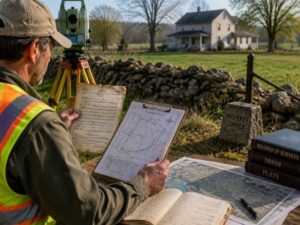
Land surveying does more than measure a yard. On older parcels, it digs into the written history behind the property to explain why the lines fall where they do. Deeds, plats and legal descriptions written decades ago often use language and markers that no longer make sense on the ground. A surveyor connects those old documents to what exists today, so an owner finally knows what they really have.
The Paper Trail Behind Your Property Lines
Every parcel has a stack of documents that describe it, some going back generations. Deeds spell out ownership, plats show how land was divided and older legal descriptions rely on landmarks that may have disappeared. A surveyor gathers these records first, before setting foot on the property.
Reading them is a skill of its own. An old description might reference a creek that changed course, a fence that rotted away or a neighbor’s tree that was cut down forty years ago. Sorting through those references tells the surveyor what the original boundaries were meant to be, which becomes the map for everything that follows.
When Records and Reality Don’t Match
Fieldwork is where the paper meets the ground. A surveyor walks the property and locates the physical evidence: iron pins, stone markers, old fence posts and worn paths. Then comes the comparison. Do the things on the ground line up with what the deed describes, or has the story drifted over the years?
Often there is a gap. A fence sits several feet off the recorded line, or a corner marker turns up in an unexpected spot. Resolving those differences takes judgment and experience. The surveyor weighs the records against the evidence and decides where the true boundary lies, which is the whole reason for the research.
How Decades Blur an Old Property
Time is rough on property boundaries. The longer a parcel sits without a fresh survey, the more small changes stack up and cloud the original picture.
Several things tend to muddy older land:
- Markers that rust away, get buried or get knocked out
- Vague descriptions written before modern measuring tools
- Informal land swaps between neighbors that never got recorded
- Family divisions passed down by word of mouth
- Improvements added over the years with no survey behind them
Any one of these is manageable. Together, they can leave an owner genuinely unsure where their land starts and stops.
Getting Ready to Sell, Split or Build
Most people order this research when a decision forces the question. Selling, dividing land among family or adding a structure all demand clear boundaries first. A survey gives owners the solid answer they need before money and plans move forward.
Buyers and lenders ask for it too. Nobody wants to close on a parcel where the lines are a mystery, and a bank will not lend against land it cannot pin down. Sorting the records out ahead of time keeps a sale or a project from stalling when someone finally checks.
A Cleaner Record for Whoever Comes Next
The research does not just answer today’s question. It creates an updated record that stays with the property for the next owner, the next surveyor and the next decision. Instead of starting over from confusing old documents, future users inherit a clear picture.
That is a quiet kind of value. A parcel with a solid, current survey is easier to sell, easier to divide and easier to defend if a question ever comes up. The work you do now saves someone real trouble down the road.
Frequently Asked Questions
What kinds of records does a land surveyor study?
A surveyor reviews deeds, recorded plats, prior surveys, tax maps and the legal descriptions of both your parcel and the ones next to it. Together these show how the land was described and divided over time.
Why can’t I just rely on my deeds?
A deed describes your land in words, but words alone can be unclear or outdated. Surveying compares that description against physical evidence on the ground to confirm what the deed actually means today.
Can research fix a boundary that has been unclear for years?
It usually can. By tracing the original records and matching them to markers still in place, a surveyor can re-establish lines that faded from view long ago.
Does land passed down through family need this kind of survey?
Often yes. Informal handoffs within a family rarely include updated surveys, so the boundaries may never have been documented clearly. A survey sorts that out before ownership changes hands again.
Is fieldwork still required if all the records are available?
Yes. Records tell part of the story, but a surveyor still has to find and check the physical evidence on the property. The final answer comes from combining both.
For a free land surveying quote, call us at (410) 883-5300 or send us a message by going here.
Posted in land surveying, land surveyor | Tagged cost of land surveying, estimating the cost of land surveying, land surveying cost