
New Elevation Certificate After Baltimore Waterfront Renovation
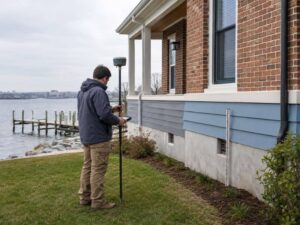
Waterfront work brings water questions along with it. After a renovation near the shore, owners often wonder whether their old flood paperwork still counts. An Elevation Certificate sits at the center of that question, because changes to a building can affect how it relates to flood risk. A remodel that touches the foundation or a lower level may create a real need for fresh documentation. Knowing when that need kicks in saves an owner from both surprise costs and gaps in coverage. Waterfront homes draw extra attention from lenders and insurers, so an outdated document can hold up a loan or leave an owner underinsured.
Waterfront Renovation Changes That May Affect Flood Documentation
Some renovations reach far enough to raise flood questions. Substantial improvements, work on a lower level, changes to a foundation, and floodplain permits can all shift how a building is documented. When these come into play, the old paperwork may no longer match the structure.
The scope of the work sets the tone. A light cosmetic update rarely changes flood documentation, while structural or below-grade work often does. On a waterfront property, that line matters more, since the building sits closer to mapped flood risk and gets more scrutiny from lenders and insurers.
The term substantial improvement carries real weight here. When a renovation reaches a certain share of a building’s value, local rules can treat it almost like new construction for flood purposes. That threshold can pull a project into stricter requirements the owner didn’t expect. Knowing whether the work crosses that line shapes the whole documentation question.
Does Interior Remodeling Alone Require a New Elevation Certificate?
Interior remodeling by itself usually doesn’t trigger a new certificate, but the honest answer is that it depends. The deciding factors include the project scope, the property’s floodplain location, local requirements, lender requests, and insurance needs. Any one of those can change the outcome.
An owner should look at the whole picture rather than the remodel alone. A kitchen refresh far from any flood-related change is very different from work that alters the lowest floor. When several of those factors line up, a new certificate can move from optional to necessary, so checking early is wise.
Timing plays a part too. A lender may ask for a fresh certificate during refinancing, and an insurer may request one to set or adjust a rate. Waiting until closing day to find out puts an owner under pressure, since a certificate takes time to prepare. Raising the question early leaves room to handle it calmly.
Elevation Certificate Terms Property Owners Should Understand
A few terms come up again and again during flood-related decisions, and knowing them helps an owner follow the process:
- Base flood elevation, the height floodwater is expected to reach in a mapped event
- Lowest floor, the reference point used to compare a building against that elevation
- Flood openings, vents that let water pass through enclosed lower areas to reduce pressure
- Building diagrams, standard drawings that classify how a structure is built
- Datum, the shared reference system that keeps all the elevations consistent
These terms show up on the certificate and in conversations with lenders and insurers. When an owner recognizes them, the review moves faster and the decisions make more sense. That understanding also helps an owner ask sharper questions about their own property. A homeowner who knows what the lowest floor means can follow why a lender cares about it, instead of nodding along and hoping for the best.
Reviewing an Existing Elevation Certificate After Property Changes
An old certificate isn’t automatically wrong, yet property changes can make it outdated. Additions, new enclosures, changed grading, and shifting property details can all leave a certificate describing a building that no longer exists. Reviewing the document against current conditions shows whether it still holds up.
That review is worth doing before an owner relies on the old form. If a renovation added an enclosure or changed the grade, the recorded elevations may miss the new reality. Catching that early lets an owner update the documentation before a lender or insurer flags the gap.
Small changes add up over the years. A new deck, a raised patio, or fresh landscaping can shift how the site sits relative to the building. None of those feel like flood work, yet together they can make an old certificate describe a property that no longer exists. A quick review against current conditions clears up whether the document still fits.
Coordination Between the Surveyor, Floodplain Manager, Lender, and Insurer
Flood documentation rarely involves just one person. A surveyor measures and prepares the certificate, a floodplain manager applies local rules, a lender sets requirements tied to the loan, and an insurer prices the risk. Each plays a distinct part in confirming where a property stands.
Bringing those roles together keeps an owner from getting caught between conflicting answers. The surveyor supplies the measured facts, and the others interpret what those facts mean for permits, loans, and coverage. When they coordinate, a waterfront owner gets a clear path instead of a pile of separate opinions.
Good coordination also saves money. When everyone works from the same certificate and the same understanding of the property, requirements stop shifting halfway through. An owner who lines up these professionals early avoids paying twice for the same information. On a waterfront home, that steady approach turns a confusing process into a manageable one.
For a free land surveying quote, call us at (410) 883-5300 or send us a message by going here.
Posted in Elevation Certificate
