
Boundary Survey Mistakes Baltimore Rowhouse Owners Make Before Building a Fence
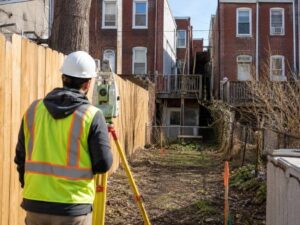
A new fence sounds easy. You pick a style, call a contractor, and set a start date. But rowhouse lots in Baltimore are narrow and old, and they hide plenty of surprises. That is why a boundary survey matters far more than most owners expect. Skip it, and your new fence might land on your neighbor’s ground. After that come tense conversations, wasted cash, or a full rebuild. The good news is that a few smart steps can keep you out of trouble.
Why the Old Fence May Be Fooling You
Many owners assume the current fence sits right on the line. In older blocks, that guess is often wrong. Fences get replaced over the years, and each crew sets the posts a little differently. Add shared walls, tight yards, and old add-ons, and the line you see may drift by inches or even feet.
A rowhouse can pass through many owners over eighty or a hundred years. Each one may have patched the fence, moved a gate, or added a small shed near the back. None of those changes were meant to cause harm, but small shifts add up when nobody keeps a record.
A surveyor treats the fence as a clue, not as proof. They compare it against deeds, plats, and recorded corners. Sometimes the fence matches the record. Other times it tells a very different story, and you are glad you checked before digging.
Check the Rear Alley Before You Pick the Line
Baltimore rowhouses often back up to a shared alley. That alley does more than hold trash cans. It carries foot traffic, gate access, and sometimes a passage the whole block uses. So the spot where you want your fence may clash with how the alley actually works.
Before you set a line, look at how gates swing and where walkways run. Do trash crews walk close to your back wall? Does a neighbor cut through near your corner to reach their own yard? These small habits often point to boundaries that go back many years, even if no one wrote them down.
A survey shows you the real edge of your lot next to that shared space. With that in hand, you can place a gate that opens the right way and still keep pickup crews happy, without blocking a path someone has used for decades.
When a Rowhouse Wall Crosses the Lot Line
Attached homes share walls, and those walls do not always follow the paper boundary. A wall, a bay window, or a set of steps can push past the line by a small amount. Owners usually never notice until a survey puts numbers on it.
This is common in old rowhouse blocks because builders worked fast and did not always measure with today’s tools. A few inches did not seem to matter back then. Now, with clear modern surveys, those small gaps can raise real questions about who owns what.
Here a surveyor documents where the wall or projection actually sits. They do not decide who owns it or how to fix it. That part is for you, your neighbor, and maybe an attorney. Still, having the facts mapped early keeps a small overlap from turning into a big fight.
Save the Boundary Clues Before the Old Fence Comes Down
Old posts, buried pins, and worn corner marks all carry information. Once a crew rips out the old fence, a lot of that evidence can vanish in an afternoon. So the smart move is to survey while the old fence still stands.
A surveyor can spot a leaning post that marks a real corner or a stone that has sat there for decades. They record it, then tie it to the legal description. If you demolish first and survey later, you may lose clues that would have made the answer clear, and the crew may need more time and money to work with what is left.
It also helps to take a few photos of the yard before any work starts. Note where old posts sit and where fences meet at odd angles. These small details might not matter to you now, but they could help a surveyor or an attorney later.
Give Your Fence Contractor More Than a Drawing
A survey drawing is a great start, yet a paper plan alone leaves room for error in the field. Contractors work faster and straighter when the line is marked on the actual ground. That is where a little extra field work pays off. Ask your surveyor to hand the crew clear guidance, such as:
- Marked corner stakes at each turn in the line
- Extra points along long runs so the fence stays straight
- Offset marks set back from the digging so they survive the work
With those marks in place, your contractor builds to the real line, not to a guess. That small step keeps the finished fence on your side for good, and it saves you from a repeat job down the road.
Frequently asked questions
Is an existing Baltimore rowhouse fence always on the property line?
No, and that is a common surprise. Older fences get replaced many times, and each new post can shift the line a bit. Shared walls and tight yards add to the drift. A boundary survey is the only way to know where the true line sits.
Can a boundary survey determine who owns a shared wall?
A survey shows exactly where the wall sits compared to the lot line. It does not rule on legal ownership or force a fix. That answer usually comes from your deed, your neighbor, and sometimes a lawyer. Still, the mapped facts give everyone a clear place to start.
How early should the survey be ordered before fence replacement?
Order it before you remove the old fence, not after. That way the surveyor can read posts, pins, and marks that a demolition crew might destroy. Early timing also leaves room for questions if the line looks off. A week or two of lead time usually works well.
What should I do if the neighboring fence crosses my property?
First, get the survey so you know the size of the overlap. Then talk with your neighbor and share what the map shows. Many small overlaps get solved with a calm conversation. If it stays stuck, an attorney can explain your options.
Should survey stakes remain in place until construction is complete?
Yes, keep them safe until the last post goes in. The stakes guide every part of the build, from corners to long straight runs. If they get pulled early, your crew loses the reference. Protect them, and the fence lands right where it should.
For a free land surveying quote, call us at (410) 883-5300 or send us a message by going here.
Posted in boundary survey
